


What’s in a Review? Adding a Method to the Squidge Eats Madness

The idea behind Squidge Eats is sharing my thoughts on theme park food, beyond the typical “oh my god you have to try this” influencer reel – no shade, but I’d like to do something a little different. I don't think I have the vibe for that sort of thing either, really. So what does different mean?

I’ve decided to put together a proper review system so that there is some kind of continuity between my foodie ramblings. Hopefully it’ll make things a little easier when comparing places at the same park – it’d be great to get to the point where I can put review scores into the Squidge Eats guides to help with this. Plus, I’ve always been a bit of a science-brain, so adding some kind of actual method to this makes me happy.
I was doing a bit of research and came across this Medium article from another food reviewer (@food.footprints) and I really like the way they break things down. So, using this system as an inspiration, Squidge Eats will use the following criteria for reviews:
A maximum score of 100, broken down into two sections – 80 points in a few categories for the food itself, and 20 across various bonus categories.
For the food, the 80 available points are broken down into the following:
General Flavour and Texture (60)
How does the food taste, do the flavours work together? Are the textures good, or does something let the dish down? You can forgive a bit of poor cooking, or something being a little overpriced, but if the dish fundamentally doesn’t taste right, then it’s probably a lost cause.
Quality and Skill (10)
How well is the dish cooked? Can you get a feel for the quality of the ingredients? Do you get an idea of what they’re going for, but the execution lets it down?
Value (10)
Less about overall cost, and more value for money – we all know about the Theme Park Tax. Do you get a good amount of food for the price? Do you get good quality food for the price? Or is it seriously overpriced for what you get?
For the bonus categories, the 20 points are broken down as follows:
Service (5)
A lot of theme park dining is quick service, but there’s still a lot to be said for how service is handled. This can cover things like the digital ordering system and how easy it is to pick up your food, right the way to how a waiter serves your table in a sit-down restaurant.
Atmosphere and Theming – AKA Vibes (5)
Some places are more themed than others, but this category covers how well an outlet is themed, as well as its overall atmosphere. How noisy is it when it’s busy? How much seating is there? What are the general vibes?
Presentation and Creativity (5)
Everyone loves an ‘Instagrammable’ plate of food, so how good do the offerings look? How well does it capture the theme of the venue?
Memorability and Miscellaneous Thoughts (5)
This is just a handful of bonus points for things that don’t quite fit into another category. Was the meal particularly memorable - like that time Captain Jack stole the bread from everyone’s tables at Disneyland Paris?
I can then use the full review score on written pieces on the site, and equivalent star ratings on shorter social or video posts. Gives us some good flexibility!
As an example – from my June trip to the Pirate’s Burger Kitchen at Legoland, I ordered the Captain’s Burger meal which set me back £22. How would that fare on this scoring system? Normally, I’d sum up all the scores together, but for illustrative purposes, I’ve broken this down into sections, along with some of the original review text.
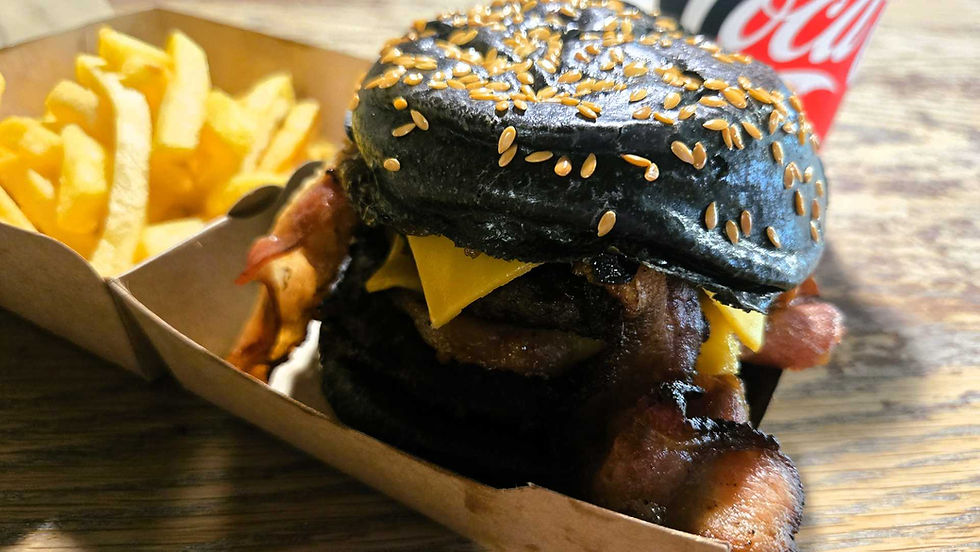
Let’s start with the food itself.
Flavour Score: 34/60
The burger itself was quite the monster with a whole load of extras alongside the two beef patties. There was a little bit of zing from the chipotle mayonnaise, and the onions added a bit of contrast to all of the meat – the pickles might have done the same, but those were swiftly removed from the pond of mayo. The bun was like any other sesame seed bun, just full of what I can only assume is black food colouring. Unfortunately, the cheese kind of got lost in all the sauce, the bacon was just another meat flavour, and the patties themselves were nothing to write home about.
The fries were actually pretty good. Clearly fresh, they were well seasoned, really fluffy in the middle with a good level of crunch to them. Sadly, they did get a bit cold by the time I’d gotten through the mammoth burger.
Overall, the burger wasn’t inherently bad, but it would have benefitted from some higher quality patties to boost the flavour. The super-fresh fries earn this meal a few extra flavour points.
Quality: 7/10
The meal was obviously fresh – I was in the restaurant fairly close to opening, and was one of the only people in the place. As I’ve said above, the fries were well cooked, but the ingredients used in the burger could definitely have been better.
Value: 6/10
I’m not convinced that this meal was worth its £22 price tag. Maybe if you were sharing the meal, it would improve the score. But I did a quick math comparison to a major big burger chain, (we’re talking fancy burgers, not traditional fast food – that’s what the Captain’s Burger feels like it’s pitching itself as) and the Captain’s Burger comes out on par in terms of price for what feels like a lower quality product. Not great on the value score.
Service: 3/5
The staff in the Pirate’s Burger Kitchen were lovely, one of the servers chatted with me while I waited for my meal – largely because the restaurant was pretty empty I’d imagine, but it was nice nonetheless. The digital ordering system was easy enough to use, though I’m not a fan of how it defaults to a large meal when you order. Nor do I like the fact that you can’t customise anything on the menu – even if it’s for an allergy.
Vibes: 3/5
The Pirate’s Burger Kitchen is very much designed to be functional. There is a large amount of space to wait around for your food, several ordering screens and plenty of chunky, kid-friendly seating. There is a general pirate vibe going on, and I enjoy the various little Lego figures through the middle of the restaurant, but it does still feel a bit like a basic cafeteria.
Presentation: 2/5
The look of the food is clearly not high on the priority list here, which when the place is aimed at kids and families, I understand. And while I appreciate the attempt at theming for the Captain’s Burger, just dying the burger bun black is a bit of a weird choice in my opinion. Lego Brick fries also exist elsewhere in the park, but not here, which would at least add a little whimsy.
No extra bonus/memorability points this time, so the final score comes to 55/100.
⭐⭐⭐
This actually works out pretty well – the food I had wasn’t bad in any sense of the word, but it wasn’t anything special considering the price, and I’m not in a rush to go back, so this score seems pretty fitting. Maybe if I do return and try one of the more basic menu items, it would adjust the score a little - we'll have to see!
Hopefully, this means it’ll work well going forward too! If I make any changes to the system, I’ll make a new post, but I don’t have any plans for that – it’d make things a bit of a pain down the line. So, I hope you’ll join me for future reviews!


Comments